
There was another zen story that we remembered in response to the questions asked at our May 9 class that is liked to the one last week on the “Eight Winds” and how those winds can move the mind when we are not aware.
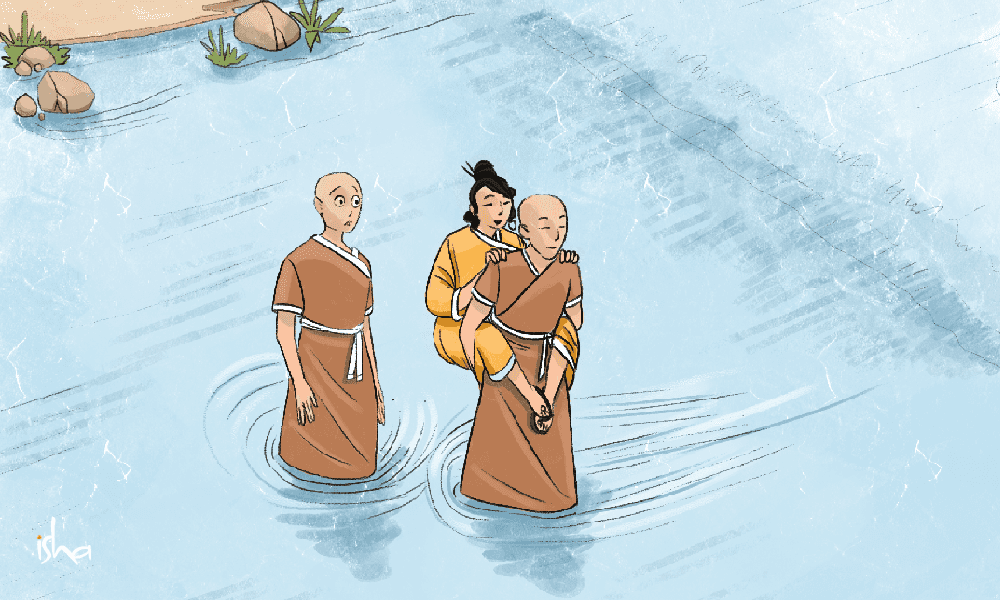
The story goes that two monks—one senior, one junior—were traveling together. After a long rain, they reached a river swollen with muddy water. A young woman stood at the bank, unable to cross without ruining her fine clothes.
The elder monk, without hesitation, lifted her, carried her across, and set her down. The monks continued walking in silence.
Hours later, the younger monk finally burst out:
“We monks are not supposed to touch women. Why did you carry her?”
The elder monk replied:
“I put her down at the riverbank. Why are you still carrying her?”
This koan teaches four principles that we also discussed in last weeks class:
1-Letting go — The older monk released the moment immediately; the younger clung to it. Dorje PaMu was always reminding us to just “put it down” or “let it go”.
2-Non‑attachment — Rules are not meant to become prisons of the mind.
3-Compassion over rigidity — The elder monk helped because help was needed.
4-Mental burdens — We often carry things long after the event has passed. The Buddha Master told us that we all too often seem to be “hell-bent on finding some dark karma to carry”.
In this case six of the eight winds moved the younger monk: 1-ridicule and 2-disgrace because he feared that the elder monk had broken a rule and he feared that he himself might be implicated and worried about what others would think; 3-suffering because his mind churned for hours so he carried the woman much longer than the elder monk did; and 4-loss because he felt felt the loss of certainty and moral superiority.
How can you practice “Putting Things Down”?
You can return to your body, feeling your breath, your feet on the ground; The mind cannot cling when it is fully embodied.
You can name the wind that is blowing right now–being aware: naming it weakens its power.
You can act with compassion, not self-image; when compassion leads, the winds have nothing to grab.




Add comment