
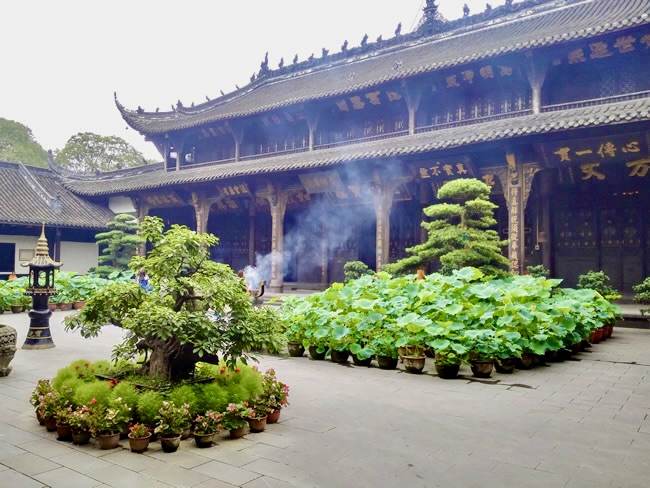
At the end of H.H. Dorje Chang Buddha’s Expounding the Absolute Truth through the Heart Sutra, Professor Huang Huibang, an elderly disciple of His Holiness also known as Hui Hui, describes the state of realization and virtue he gained from listening to his Buddha Master expound the Dharma contained in that book. He is mentioned 28 times in the book. A brief biography of this devout Buddhist disciple is provided at the end of his comments.
What Hui Hui, a Buddhist of Great Virtue, Learned from Listening to this Sutra
The Benefits I Experienced and the Determination I Aroused After Listening to the Master’s Expounding the Absolute Truth Through the Heart Sutra
Disciple Huang Huibang (Hui Hui):
Fear impermanence. Arouse a mind determined to leave samsara. Arouse bodhicitta in the ultimate sense. Abide steadfastly in the reality of true emptiness, the original intrinsic nature that is the pure one body. With genuine bodhicitta, strictly observe the precepts, hone the power of dhyana, and concurrently apply both dhyana and wisdom. Based on its intrinsic nature of emptiness, tranquility, and no-birth, the dharmakaya is stable and immovable. From this, innate enlightenment separates from one’s body.
Intrinsic-reality prajna (the mother brightness) generates the self-illumination of initial enlightenment, which is contemplative-illumination prajna (the child brightness). The self-illumination of initial enlightenment is not separated from the six conditioned sense objects but penetrates the six sense objects and illuminates their nature. Be awake and still, serene and clear, boundlessly vast. Realize the emptiness of phenomena and their underlying principle. Brightness and emptiness are not a duality. The manifest and emptiness are not a duality. Clearly see that the five aggregates are all empty, realizing that self or personhood is empty and that phenomena are empty, the reality of true emptiness will naturally appear before you. The mother brightness and child brightness will merge. Initial enlightenment and innate enlightenment will unite, becoming the ultimate enlightenment.
Based on the essence of truth-realization as expounded by our Master, who is no different from Buddha, begin your practice with complete faith. The whole practice depends on faith. The practice includes taking refuge, arousing resolve, the Five Precepts, the Ten Wholesome Behaviors, the Three Sets of Pure Precepts, the Four Limitless States of Mind, giving rise to bodhicitta, carrying out the myriad practices subsumed in the Six Paramitas and the Four Methods of Bringing People into the Fold, carrying out bodhicitta, and being a totally good person in worldly matters. One with virtue and sincere intention to become accomplished can progress with diligence. With an upright mind and sincere intention, exercise self-restraint and return to propriety. Work for the common good without regard for personal interests. Be a Bodhisattva of great conduct who transcends this world. At this very moment, arouse Mahayana bodhicitta. Practice the vows of Samantabhadra, which are as vast as an ocean. Practice Vajrasattva Dharma. Receive empowerment according to the four meanings. Sincerely repent of your sins. Concurrently cultivate the three bodies—dharmakaya, sambhogakaya, and nirmanakaya and practice the mandala offering Dharma, the kasaya[1] offering to monks as homage, the four offerings Dharma, the Dharma of corresponding one’s three karmas with those of the Master, the Phowa Dharma, the Long-Life Dharma, the Avalokiteshvara Yidam Vajra Yoga Perfection Dharma, the Dharma protectors Dharma, and so on. Even practice the Great Perfection, the Trekcho, and the Togal and deeply enter the Xianliang Great Perfection.
Every practice starts from the preliminary practice and proceeds to the main practice. You should practice in accord with the Dharma, being scrupulous about every detail. Begin your practice with complete faith. The whole practice depends on faith. The dharma realm is the thought. The thought is throughout the dharma-realm. Utilize the entire entity. Complete utilization is the essence. Attaining all-knowing nirvana, one greatly utilizes the whole.
Additionally, attain the bright entity of dharmakaya that merges brightness and emptiness into one entity, instantly pervades the three time periods, pervades everywhere the ten directions, is permanence, bliss, true-self, and purity and was never born and will never perish. It is the intrinsically bright mind of enlightenment. Beyond this, there is not one single thing. There originally have never been personhood, self, the five aggregates, the true mind, the natural world,[2] and all phenomena of the six realms within the three spheres. All of these are due to the beginningless avidya of living beings, who are unaware that the dharma-realm is of one characteristic. They do not understand that the dharma-realm of the one reality, the bright and empty reality, is their original nature. Their own minds do not accord with reality. Thus, they do not eradicate avidya, and thoughts arise in their minds. They do not know that such thoughts are originally nonexistent and become attached to them, thinking that there is an “I” that is the subject thinking such thoughts. Since there is the subjective part of perception, then there of course is the opposite objective part. Thus, there is the relativity of subject and object. There is good and ugly, love and hate. Conditioned by craving, grasping, and existence, there is birth, aging, sickness, and death. As a result, there is transmigration through birth and death in the muddy sea of suffering.
Going from the dharmakaya state to undergo samsara is completely due to avidya or non-enlightenment, with thoughts arising in their minds. What was totally genuine becomes false. It is for this great matter based on karmic conditions that a Buddha has appeared in the world and is now revealing the truth to living beings, causing them to have the knowledge and views of a Buddha. We are now fortunate to hear the Buddha Dharma. All of us should go from non-enlightenment to initial enlightenment. Because of the unawareness of evil causes, thoughts arise in the mind. What was totally genuine becomes false.
Now, with initial enlightenment, when the seal is impressed on the mind and thought is expanded, what was totally false returns to being real. The Dharma is as stated above. Based on intrinsic-reality prajna, which is the principle and actuality of innate enlightenment, the Dharma opens up the intrinsic light of initial enlightenment, the contemplative-illumination prajna. Turn the light to illuminate inwardly to clearly see the principle and actuality of innate enlightenment, the intrinsic-reality prajna. Brightness and emptiness are not a duality. Brightness and emptiness are one thusness. The manifest and emptiness are not a duality. Manifested from true emptiness are the myriad phenomena that marvelously exist, all of which are inherently unborn and unperishing, illusory, unobtainable, and empty in essence. Emptiness and existence are not a duality. Everything is at once empty, false, and in the middle. There is no obstruction between principle and phenomena. There is no obstruction among all phenomena. One is all. All are one.
In the emptiness of intrinsic nature, there originally are no five aggregates, no eighteen realms of cognition, no four realms of body and mind.[3] Everything is empty and just a result of sense objects and sense bases. When the light of the spirit uniquely shines, everything is nonexistent. Because of this, only the true mind illuminates. Only the true self is worthy of respect. Thus, holy ones are selfless. To them, everything in the universe is their self. Benefiting others is benefiting oneself. Harming others is harming oneself. The dharma-realm is self. Self is the dharma-realm. Self and phenomena are all nonexistent. Hence, they attain the bright and empty true mind that was never born and will never perish, that instantly pervades the three time periods, and that pervades everywhere in the ten directions.
All Buddhas and living beings have this same one mind. The only difference is whether one has awakened to it or not. Therefore, practitioners must never forget their innate intrinsic nature, their pure mind of enlightenment. Do not fall into the attachment that regards as real that which relatively and illusorily exists. Do not fall into deluded conceptualization that differentiates. Do not fall into the muddy sea of suffering. Instead, based on the principle and actuality of innate enlightenment (intrinsic-reality prajna), open the Dharma to generate the intrinsic light of initial enlightenment (contemplative-illumination prajna). Turn the intrinsic light of initial enlightenment inward to illuminate the principle and actuality of innate enlightenment. The light generated, which is the same as it was from the beginning, completely illuminate all entities. Clearly see that brightness and emptiness are not a duality, that the manifest and emptiness are not a duality, and that there inherently are no five aggregates, no eighteen realms of cognition, no matter and mind, no personhood or self, no myriad phenomena. The more you cut off the avidya-based habitual tendency of attachment, the more you realize the emptiness that is the dharmakaya. One by one, untie the six knots: motion, stillness, sense bases, awareness, emptiness, and cessation. Realize the three emptinesses. Empty the five aggregates. Transcend the five turbidities.[4] After arising is extinguished, perishing will be extinguished. Thoroughly understand and clearly see that principle and cognition are not a duality. Unite initial enlightenment with innate enlightenment to attain ultimate enlightenment.
What is important is the essence for realizing enlightenment that was expounded by the Master, who is no different from a Buddha. That includes strict observance of the precepts, correspondence of your three karmas, concurrent application of both dhyana and wisdom, and the non-duality of emptiness and existence. Steadfastly abide in absolute, true emptiness, in the dharmakaya that was not born, in right dhyana that is imperturbable. The bright and empty fundamental nature was not born and does not perish. It is inherently pure. It pervades the entire dharma-realm yet is immutable and immovable. It is immutable, yet it accords with conditions. It accords with conditions, yet is immutable.
Thus, you will be able to freely transform things rather than be transformed by things. As such, greatly apply the whole. Apply it in an unimpeded manner no matter what the application may be. Then, anyone can be as Avalokiteshvara, gaining mastery over observation. Starting from the determination to leave samsara, realize the emptiness that is essential nature and the brightness that is intrinsic nature. Extend great compassion everywhere. Manifest in accord with conditions. Benefit and save sentient beings. Concurrently apply dhyana and wisdom. Out of compassion, manifest through transformation. Although you manifest through transformation in accord with karmic conditions, conditions also awaken you to the bright and empty fundamental nature that is inherently clear, pervades the entire dharma-realm, does not arise or perish, is not defiled or pure, anddoes not increase or decrease. It does not gain or lose, come or go, change or move. It does not change, but it accords with conditions. It accords with conditions, but it does not change. It is permanence, bliss, true-self, and purity. It is unimpeded mastery. It is just as what is said—compassion is the condition for the gate to enlightenment. Arouse the resolve to wipe off the accumulated dust. The myriad things cover oneself. Look within and succeed. There is no greater bliss than this.
The way of practice is like what is stated in the Suramgama Sutra. The sense bases have the nature of floating. Reverse the outward flow of the six sense bases so that everything returns to one nature. Abandon consciousness but use innate character. Abandon that which is illusory, the sense bases, sense objects, and consciousnesses. Instead, use your innate character, Buddha-nature, true thusness, the true nature that is dharmakaya. Turn your consciousness into wisdom. Through opening up the group of the five sense bases, the sense objects disappear, and you awaken to the state of conditionality. Thoughts arise due to the prior causes of avidya and non-enlightenment. Sense objects are perceived through different sense bases. An example of a sense base is the eye base. One delusively sees flowers in the sky. That is differentiating among sense objects.
Now that initial enlightenment has been attained, the six sense bases flow back to Buddha-nature. Then, sense bases and sense objects are eliminated, and one reaches the enlightened nature, a state that is inherently perfect. It is like what Yongjia stated in his Song of Realizing the Way: “Mind is the sense bases. Sense objects are dust. Both are like marks on a mirror. Only when the marks and dirt are completely removed will light appear. When mind and sense objects are both extinguished, one’s nature is then true.”
I have resolved to look up to and follow one of great moral integrity. I have resolved to follow the teachings of my Master and diligently cultivate myself in accord with the Dharma. However, I feel inadequate due to my advanced age. Impermanence is frightening. I sincerely hope for the grace of my Master and the Three Jewels. I sincerely hope that that they will be compassionate toward me, take pity upon me, increase my lifespan and health, and have me return to my youthful state so that in this life I will be able to diligently cultivate myself, attain great accomplishment, and propagate the Dharma to save living beings. I also hope that the Master and the Three Jewels will empower me, that I will be led away by the Buddhas when this body of karmic retribution dies, that I will ascend to the Western World of Ultimate Bliss, quickly attain Buddhahood, universally save living beings, fulfill my vow of enlightenment, and fulfill the vows practiced by Samantabhadra.
I sincerely beseech my Master, my yidam, the Three Jewels, dakinis, and Dharma protectors to take pity upon me and accept me, to compassionately empower me so that my wishes will be fulfilled. With tremendous devoutness, I prostrate and pray. May I use this body and mind to serve worlds as numerous as dust motes. That is called showing gratitude for the kindness of the Buddhas. I vow to dedicate all of my merit of goodness to adorn the pure lands of Buddhas. I vow to repay those above for the four kindnesses that I have received. I vow to assist those below in the three realms of suffering. May all sentient beings in the dharma-realm attain Buddhahood!
[1] An outer vestment worn by a Buddhist monk.
[2] That is, the world of insentient matter.
[3] Earth, water, fire, and wind.
[4] Also called the five defilements of the world, they are the turbidity of an eon in decay, the turbidity of mistaken views, the turbidity of afflictions, the turbidity of being a living being, and the turbidity of having a lifespan.
Biography of Huang Huibang (Hui Hui)
[The following is also from Expounding the Absolute Truth through the Heart Sutra,]Professor Huang is a famous person of great virtue in China, the Vice President of the Jiangxi Province Buddhist Association, and Jiangxi Rinpoche of the Tibetan lineage of Buddhism. When Huibang, who is now an elderly man, was twenty-nine years old, he graduated from Tokyo Imperial University in Japan, majoring in philosophy. He learned esoteric Dharma of the Tiantai sect, eastern esoteric Dharma of Japan, and Dharma of the Pure Land sect. He also graduated from Taisho University in Japan.
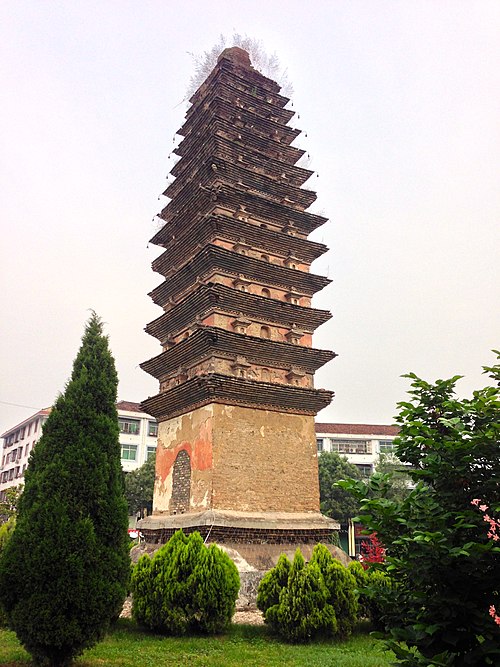
After returning to China, he served as a military instructor for the thirteenth to eighteenth graduating classes at the Huangpu Military Academy.[1] Because of his profound Buddhist learning and profound practice of Buddha Dharma, he was hired as a professor at the Buddhist Studies Academy at the Baoguang Temple, one of the four great Buddhist temples in China. There he elucidated the absolute truth of Buddhism to the four types of disciples, including monks. During his life he published numerous writings on logic and philosophy. In order to become even more accomplished in Buddhist learning, he traversed great mountains and famous rivers and traveled throughout Japan and the Western Regions.[2] He received initiations from Han Chinese and Tibetan virtuous ones and diligently practiced the Great Center Dharma Method. The accomplishments of ordinary virtuous ones could not possibly compare with his.
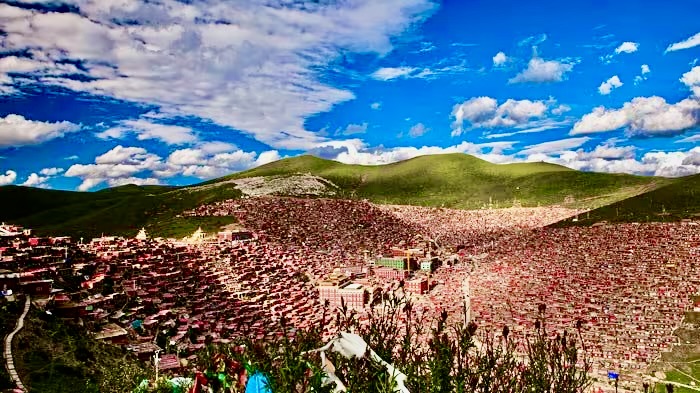
More recently, at the age of eighty-eight, he went to the trouble of travelling a long distance to attend the Larung Five Vidyas Buddhist Academy,[3] where he pursues advanced studies under Dharma King Jigme Phuntsok. One day the Dharma king conferred upon Huang Huibang and 10,000 other people the Great Perfection initiation. At that Dharma assembly, Dharma King Jigme Phuntsok publicly announced that he was performing the initiation that day because a person of great virtue was there whose karmic conditions had matured. That person of great virtue was Hui Hui Great Rinpoche (Huang Huibang).
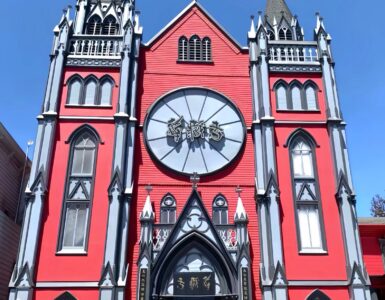
On another day, Dharma King Jigme Phuntsok summoned Hui Hui before him and whispered to him, “You should go to Chengdu and seek out a person of tremendous holiness who is higher than I am. He is called Great Dharma King Yangwo.[4] You will learn the highest great Dharma.” Accordingly, Hui Hui went to Toufu Street in the city of Chengdu, where he listened to teachings from and studied under H.H. Dorje Chang Buddha III. He received supreme Dharma methods from inner-tantric and state-practice initiations. On the first day of the first month of the lunar year in the year Ren Shen,[5] he had the karmic affinity to listen to His Holiness the Buddha expound the Dharma of the absolute truth of prajna. There at the mandala, he penetratingly awakened to very profound and wondrous truths. He then put down in writing what he had learned and submitted his manuscript for printing. What he wrote is very much a Dharma treasure. [The heartfelt words of the elderly Professor Huang, an honorable rinpoche, are reprinted above.]
[1] Also called the Whampoa Military Academy or the Republic of China Military Academy. It was founded by Sun Yat-sen, the founder of the Republic of China, in 1924. The academy’s site at that time was in the city of Guangzhou in China. The thirteenth to eighteenth graduating classes were from 1936 to 1943.
[2] This refers to regions west of the Yumen Pass, including Xinjiang and parts of Central Asia.
[3] Also known as the Larung Ngarig Buddhist Academy. It is in Seda County, Ganzi Prefecture (a Tibetan autonomous prefecture in western Sichuan Province, China) and was founded by Jigme Phuntsok in 1980. It may be the largest Buddhist institution in the world with 40,000 students.
[4] This is referring to H.H. Dorje Chang Buddha III.
[5] The year 1992.
Originally posted October 7, 2025.
CLICK for article that includes links to readings and discussions on ZOOM of this testimonial and all of Expounding the Absolute Truth through the Hear Sutra.

Add comment