
I have always thought the simple Oryoki-style of serving meals that I had encountered in both Zen temples where I stayed and did meditation retreats in Japan as well as their Western counterparts in America was a very important part of the retreat experience. I think the first Buddhist book that I found in the book store of the Tokyo Hilton while preparing to visit the Zen gardens of Kyoto–Instructions for the Zen Cook by Eihei Dogen (1200-1253)–was an important part of my training and why I chose to become a Buddhist almost 50 years ago. Its rituals of respect and introspection offer the cultivation part of the retreat that compliments the Dharma practice of zen meditation. A retreat like this could be a perfect way to intensely practice what we were given in Learning from Buddha.
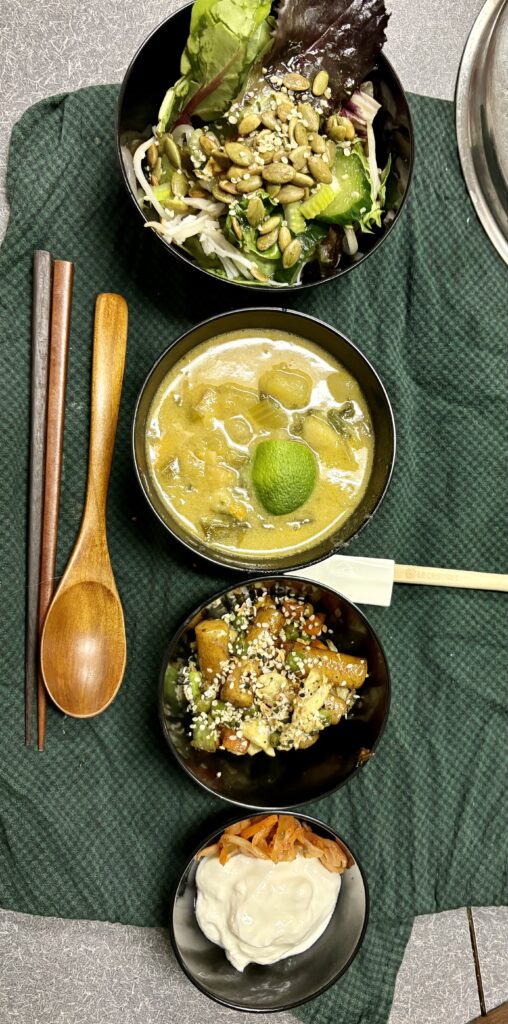
Your Oryoki set of four bowls includes a wooden spoon that is only used in the largest or “Buddha” bowl, chop sticks, a cleaning spatula that also holds the lunch offering to the local spirits, a terry-cloth cleaning cloth, a napkin, and a pouch to hold the utensils. It is all wrapped in a larger cloth that is shown here as your lotus place mat.
This is a typical lunch meal with salad, rice, or pasta in the Buddha Bowl, a soup in the Second Bowl, Vegetables in the Third Bowl, and either a separate protein like tofu or eggs in the fouth or a condiment to compliment the other dishes. The fourth bowl also may offer nuts or onion products and the like when such items are not allowed or eaten by some of the meditators, but enjoyed by others. Fruit is served at least once a day. The basic rules would try to have all five colors (white, yellow/orange, red, green, and blue/black) and six tastes (plain or bland, sweet, sour, bitter, salty, and hot or spicy) should be represented but subdued. Sometimes condiments are offered like Chili Oil or Gomasio (roasted sesame seeds and salt) to offer more intense flavors for those who want them.
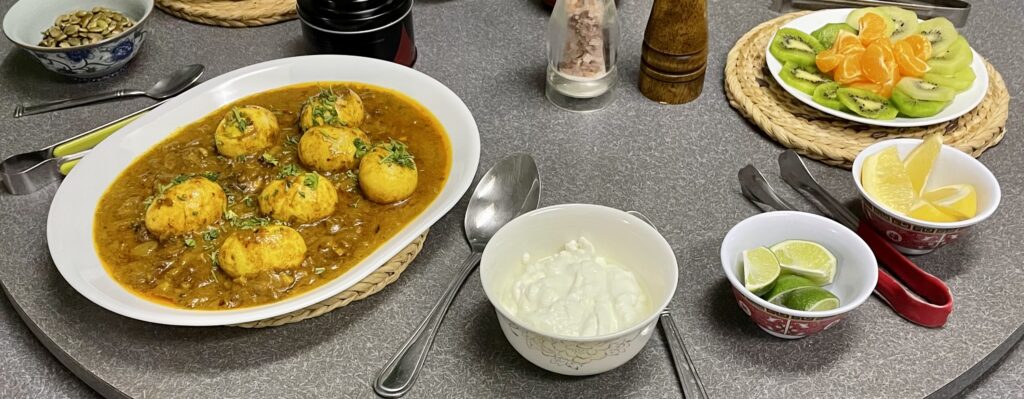
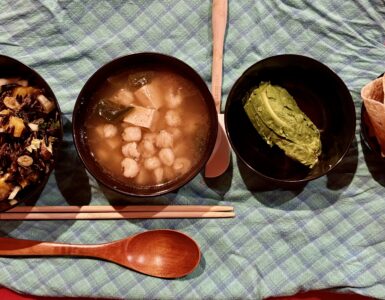
This Oryoki breakfast had plain white rice (not shown), curried eggs, and fresh fruit. Yogurt and citrus wedges were also offered as a condiment for those who wanted it. All meals are vegetarian and if there are strict vegans attending, eggs and dairy will be served either as condiments or with a tofu alternative. Maple syrup or monksfruit would be used instead of honey. Sugar would be avoided and salt is minimized or not used, but salt and pepper or gomasio (ground toasted sesame seeds with kosher salt) and sometimes gochugaru (mild Korean chili flakes) may also be offered with other condiments to accommodate more tastes. When required, we can offer gluten free options.
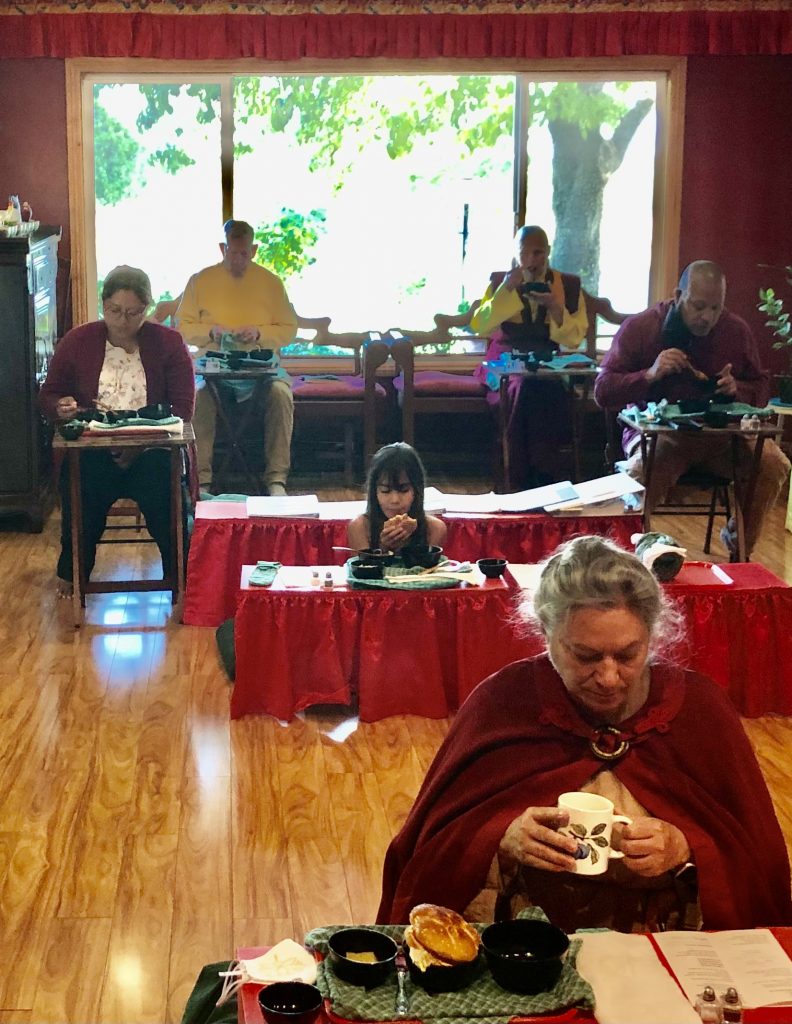
Just eating in silence is a part of the retreat experience.
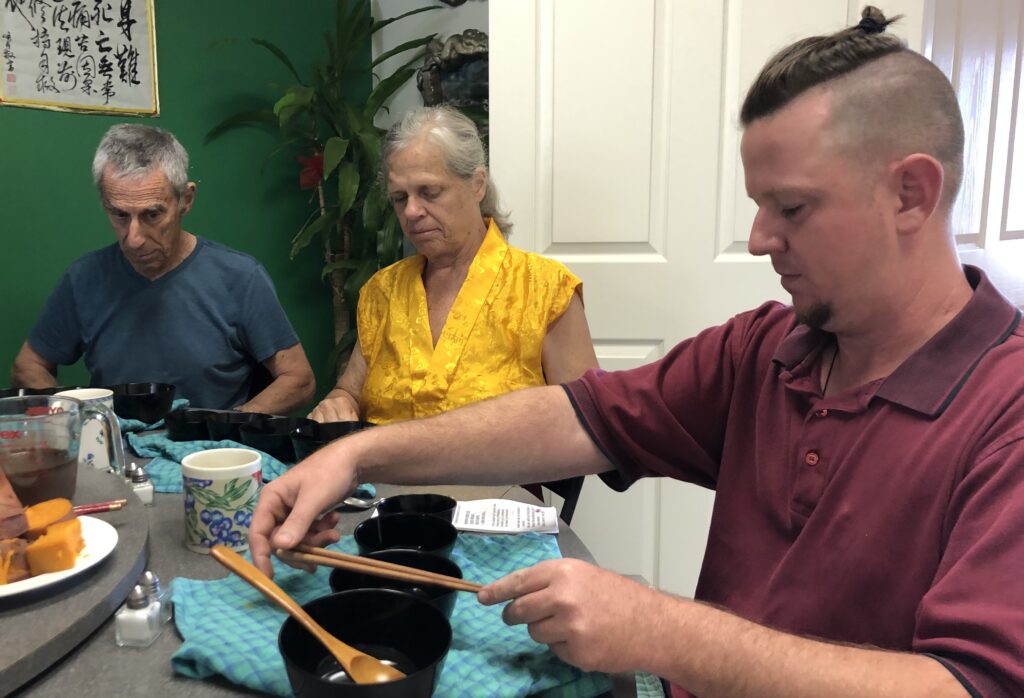
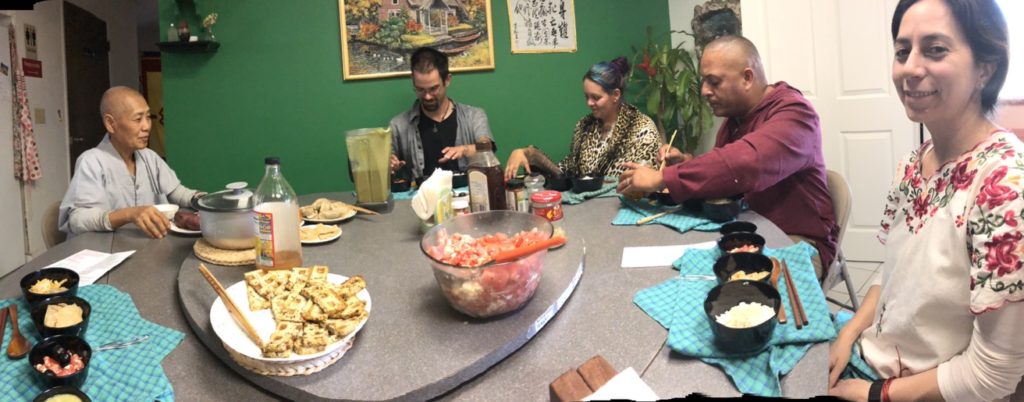
When the retreats are small, the meals are eaten in the kitchen, but follow the same rules and protocols.
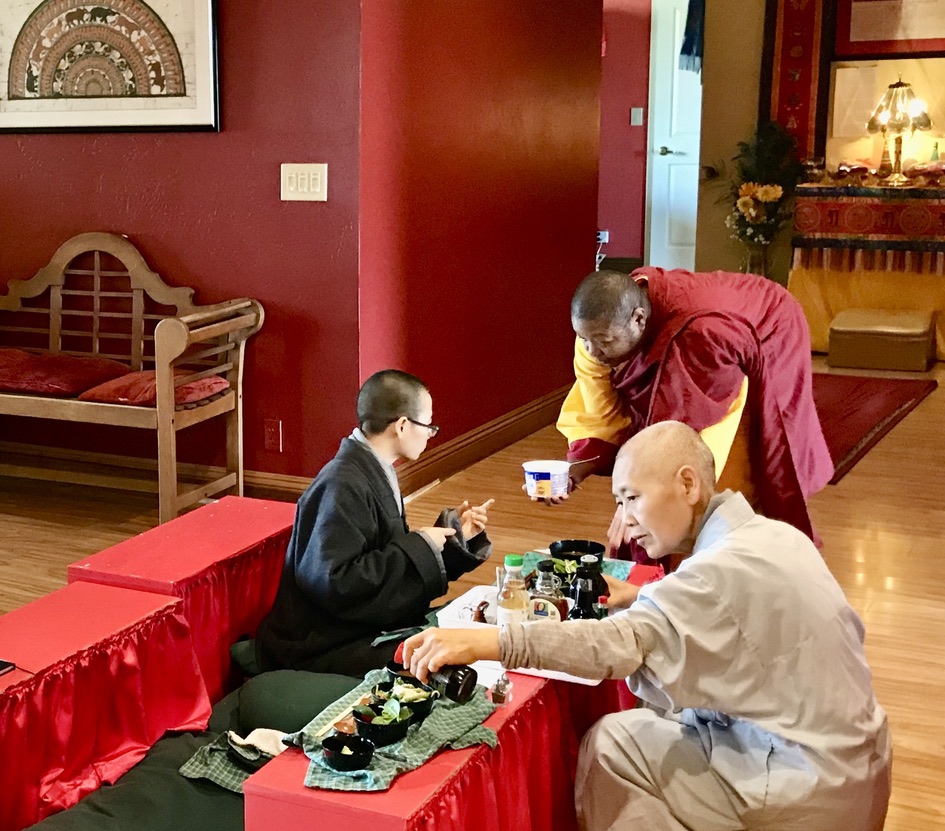
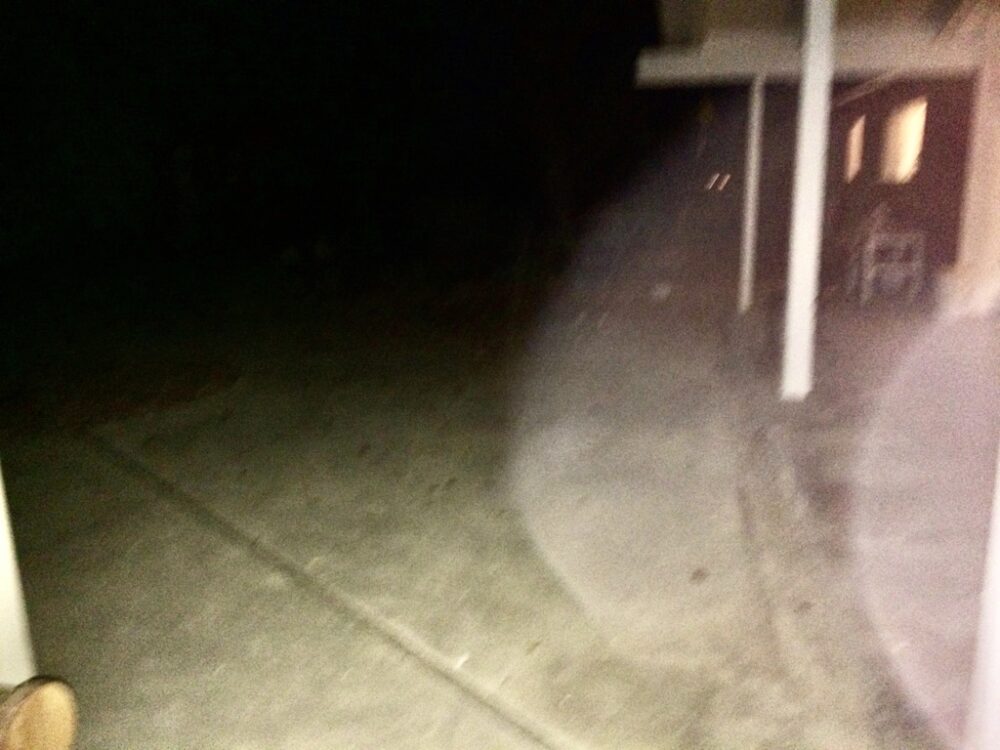
Whenever there are enough participating, everyone who is able, takes a turn serving as servers and as recipients with gratitude expressed both ways. The servers also collect a food offering from everyone for the hungry ghosts and other local spirits and take it outside and offer it. I don’t know what this means, but someone did capture a picture of what looks like very plump spirits near the kitchen door where these offerings are made.
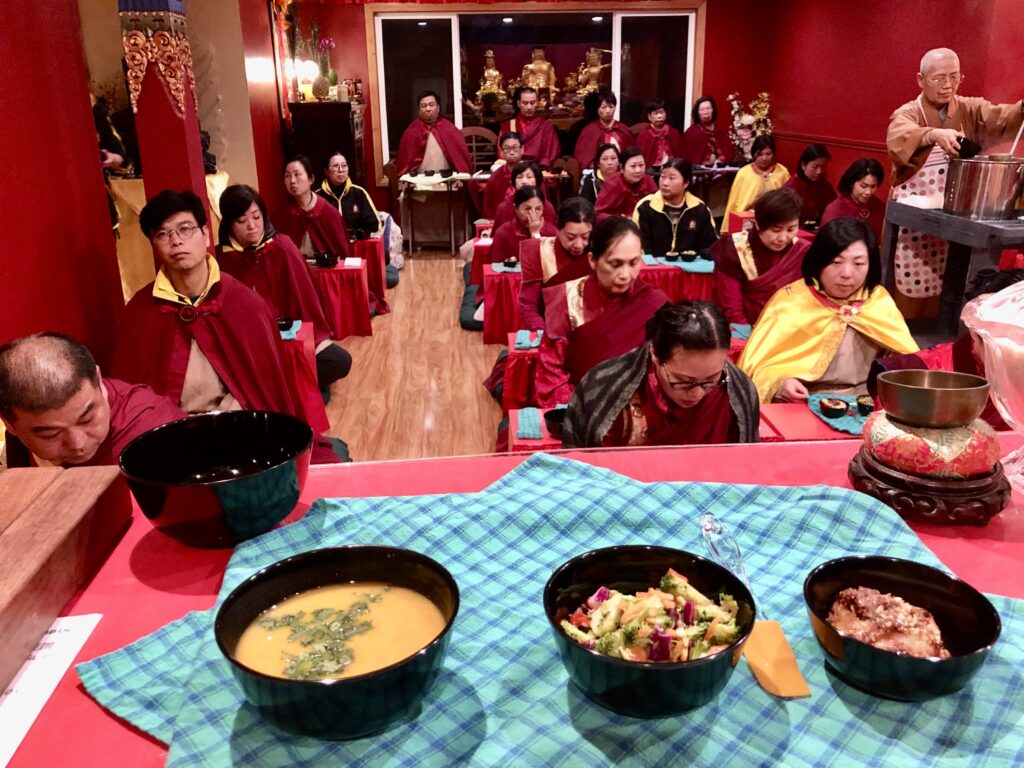
When an evening meal is served, it is not considered part of the Oryoki system. The Buddha Bowl and its wooden spoon are not used, the clappers are not hit, and there is no chanting. Because most participants have eaten little at this time and our current program is quite full, we sometimes do not serve anything in the Buddha Hall. Snacks and fruit may be available in the Community Room for anyone wanting something.
This is an efficient and simple way to silently serve a large (or small) group of people who may have different food customs, taste, and requirements and have everyone clean their own utensils.You keep your set of bowls, cloths, and utensils with you for the entire retreat. There are extra cleaning cloths and procedures to handle any serious accidents.
After finishing your meal you use your spatula to clean your bowls. Then you are served hot water and you continue to use your spatula to clean bowls and utensils starting with the Buddha Bowl. When it is clean, you pour the water from that bowl into the Second Bowl, take you cleaning cloth and wipe or polish the Buddha bowl. You leave the cleaning cloth in the Buddha Bowl for all the rest. Now you proceed to do the same for all the other bowls. When you are at the last bowl you drink a bit (or a lot) of the cleaning water, but always leave some water to give the spirits. If you find you have too much water to put it all in the last bowl, you may drink some earlier but YOU MUST NOT DRINK FROM THE BUDDHA BOWL! A server will come and pick up your excess water. Although we are not suppose to waste food and eat whatever we take, if you do have pits or something you cannot eat, you may give it to the server with the water to nourish the spirits.
I hope that you are able to participate in one of our Tathagata True Dharma Zen Retreats and experience the Oryoki part of it.
CLICK for October 21, 2026 article on the Oryoki lunch served at a recent retreat that also includes links to more information on the Oryoki Service and even recipies for dishes served at our retreats.


Add comment